

Are Murphy Beds Safe?
Murphy beds — also known as wall beds or fold-down beds — have come a long way since their early 20th-century origins. Modern Murphy beds are engineered with robust safety mechanisms, making them a reliable and practical solution for space-saving living. But like any piece of furniture, safety depends on quality, installation, and correct use.
In this guide, we answer the most common safety questions UK buyers ask before purchasing a Murphy bed.
How Does a Murphy Bed Stay Up?
The key to a Murphy bed's safety is its lifting mechanism. There are two main types:
- Piston (gas lift) mechanism – Uses compressed gas pistons to counterbalance the weight of the mattress and frame. This is the system used in our Genius series — offering smooth, effortless operation with no adjustment required over time.
- Spring mechanism – Uses coiled springs to provide tension. This is the system used in our Basic series — a reliable and cost-effective solution, though springs may require periodic adjustment as they can lose tension over time.
Both systems are safe and proven — the right choice depends on your budget and how frequently the bed will be used.
Can a Murphy Bed Fall Down Unexpectedly?
A properly installed Murphy bed with a correctly calibrated mechanism will not fall down on its own. The piston or spring system holds the bed securely in the raised position. However, there are a few things to keep in mind:
- Always use the mattress weight specified by the manufacturer — too light or too heavy a mattress can affect the balance.
- Ensure the unit is wall-mounted strictly in accordance with the manufacturer's installation instructions.
- Inspect the mechanism periodically for signs of wear.
Is It Safe to Sleep in a Murphy Bed Every Night?
Absolutely. Murphy beds are designed for regular, nightly use. They support standard UK mattress sizes (single, double, king) and are built to the same structural standards as traditional bed frames. Many of our customers use their Murphy beds as their primary sleeping solution — not just for guests.
The key is choosing a quality mattress that fits the bed's specifications. We recommend mattresses between 21–24 cm in depth for optimal performance with our mechanisms.
Are Murphy Beds Safe for Children?
Murphy beds can be used safely in children's rooms with a few precautions:
- Always lower and raise the bed with adult supervision for younger children.
- Ensure the bed is fully locked in the open (down) position before a child climbs in.
- Choose a model with a locking mechanism that prevents accidental folding when the bed is in use — all Phantom Furniture wall beds include this as standard.
- Keep the area around the bed clear when raising or lowering it.
What Are the Key Safety Features to Look For?
When shopping for a Murphy bed in the UK, look for these essential safety features:
- Anti-tilt legs – Fold-down legs that support the bed frame when open, preventing any forward tipping.
- Locking mechanism – Prevents the bed from folding up while someone is sleeping in it.
- Wall anchoring – The unit must be securely fixed to the wall. Always anchor into wall studs or use appropriate fixings for your wall type.
- Smooth piston mechanism – Ensures controlled, effortless movement without sudden drops.
- Quality materials – Solid wood or high-grade MDF construction provides long-term structural integrity.
How Much Space Do You Need for a Murphy Bed?
One of the most common questions before buying a wall bed is: will it actually fit? The answer depends on whether you choose a horizontal (sideways-folding) or vertical (front-folding) configuration. Below are the key dimensions to plan your room layout correctly.
Horizontal Murphy Bed – Space Requirements

A horizontal wall bed folds out sideways, making it ideal for rooms with lower ceilings. When open, the overall length of the bed (including the cabinet) is:
- 133 cm – for a 90 cm wide mattress
- 163 cm – for a 120 cm wide mattress
- 183 cm – for a 140 cm wide mattress
The cabinet depth when closed is 41 cm. Make sure you have clear floor space in front of the unit equal to the overall unfolded length listed above.
→ Browse our Horizontal Murphy Beds
Vertical Murphy Bed – Space Requirements

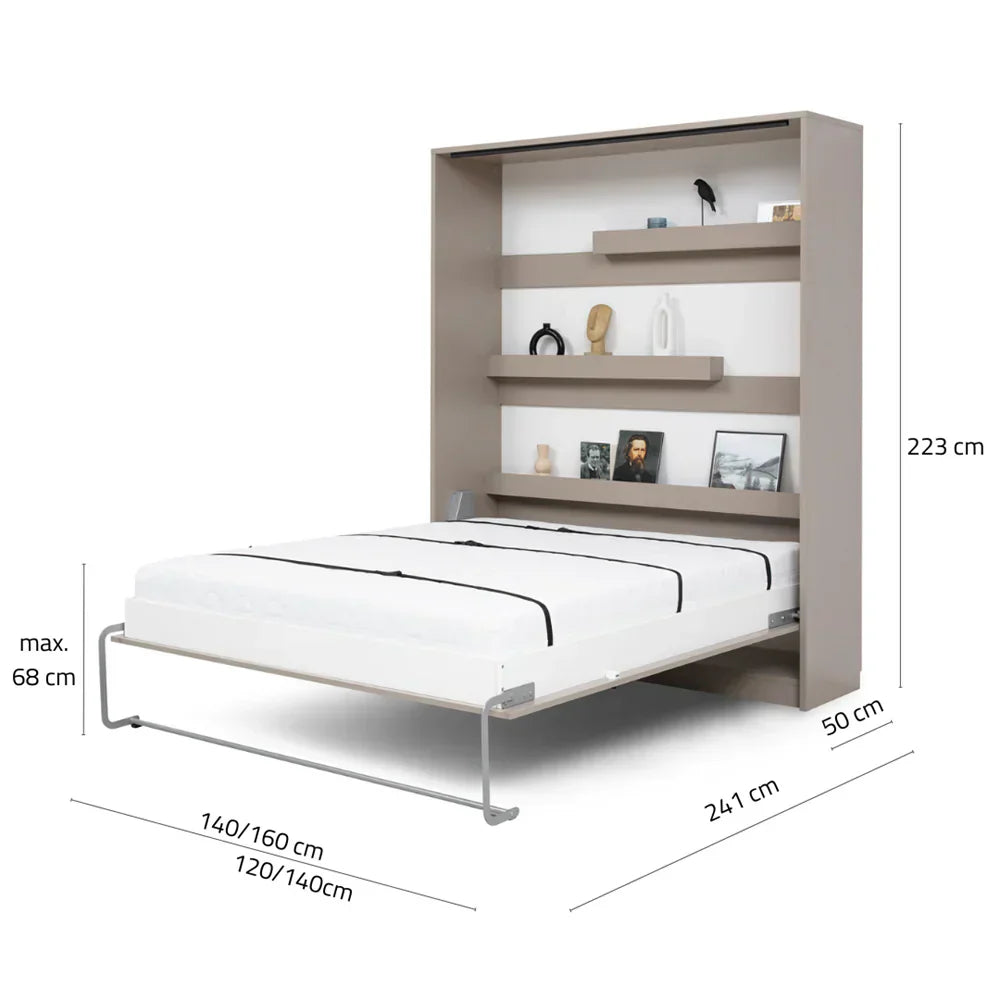
A vertical wall bed folds down from the front, which means it requires more floor depth but less wall width. Key dimensions:
- Height: 223 cm (cabinet closed)
- Depth when open: 241 cm — ensure you have this clear floor space in front of the wall
- Cabinet depth (closed): 50 cm
- Bed frame height when open: max. 68 cm
- Available widths: 120/140 cm or 140/160 cm or 160/180 cm
⚠️ Important: A vertical Murphy bed requires a minimum ceiling clearance of at least 5 cm above the cabinet height (i.e. ceiling height of at least 228 cm for a 223 cm unit). This extra space is essential to allow the bed mechanism to open freely without obstruction. Always measure your ceiling height before ordering.
→ Browse our Vertical Murphy Beds
How Should a Murphy Bed Be Installed?
Correct installation is the single most important factor in Murphy bed safety. Here's what to ensure:
- Locate wall studs – The unit must be anchored into structural studs, not just plasterboard.
- Use the correct fixings – Follow the manufacturer's hardware recommendations for your wall type (timber frame, brick, concrete).
- Level the unit – An unlevel installation can cause uneven stress on the mechanism.
- Check all bolts and fixings – Tighten everything fully and re-check after the first few uses.
- Professional installation – If in doubt, use a professional fitter. Phantom Furniture offers installation services across the UK.
Installing on a Plasterboard (Stud) Wall?
Both horizontal and vertical Murphy beds must be fixed to the wall — this is non-negotiable for safe use. If your wall is made of plasterboard (drywall), you cannot use standard wall plugs, as plasterboard alone will not hold the load.
In this case, the unit must be anchored directly into the metal or timber stud frame behind the plasterboard. A professional installer will locate the studs using a stud finder and use appropriate long screws or bolts to fix through the plasterboard and into the frame. If studs are not in the right position, a horizontal timber batten can be fixed across multiple studs first, and the bed unit then fixed to the batten.
If you are unsure about your wall construction, always consult a professional before installation.
How Long Do Murphy Beds Last?
A well-made Murphy bed, properly installed and maintained, can last 20 years or more. The piston mechanisms used in our Genius series beds are rated for tens of thousands of open/close cycles — far more than you'll ever need in a lifetime of daily use.
To extend the life of your wall bed:
- Wipe down the mechanism with a dry cloth periodically.
- Check and tighten fixings every 12 months.
- For Basic series beds, check spring tension annually and adjust if needed.
- Avoid overloading the bed with items heavier than the specified mattress weight.
Complete Your Murphy Bed Setup
Safety is just the beginning. A Murphy bed works best as part of a complete room solution. At Phantom Furniture, you can pair your wall bed with integrated wardrobes, shelving units, and desk systems — all designed to work together seamlessly. Browse our full range in store to find the perfect combination for your space.
Have questions about a specific model? Our team is happy to help — get in touch with us today.