

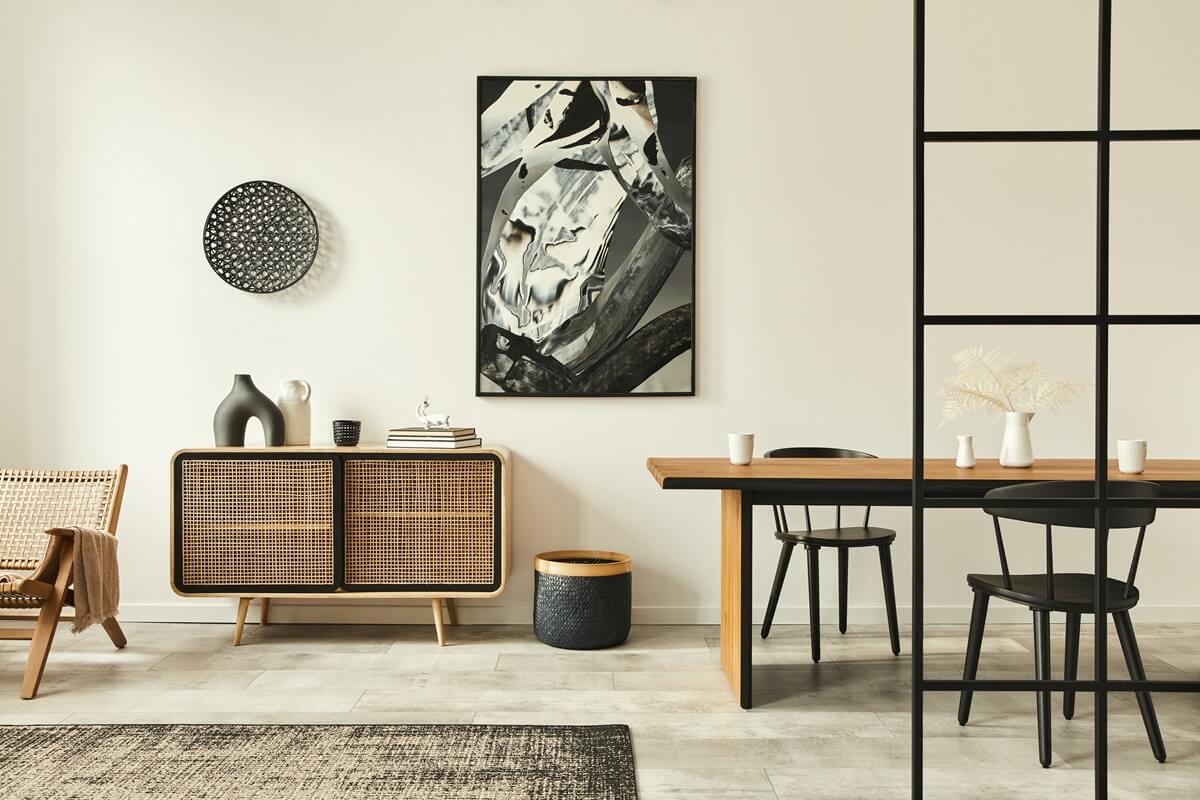
Open-plan living is a popular choice for modern homes, combining kitchen, dining, and lounge areas into one grand space. Clever furniture layout is key for defining distinct zones within this open expanse. Explore innovative ideas to create a stylish, functional environment in your home.
From the article you will learn:
-
How to use furniture to create distinct zones in an open-plan living area without walls.
-
Effective strategies for selecting multifunctional furniture pieces.
-
How to optimise the layout of an open-plan lounge and kitchen for better flow across zones.
-
Ways to define specific areas using strategic placement of furniture like rugs and bookshelves.
-
Techniques for incorporating statement pieces that draw attention and offer functionality.
-
Tips for selecting adaptable furniture that can transform a space depending on the occasion.
-
The role of lighting in differentiating between various zones within an open-plan living space.
-
How choosing the right colour schemes can foster a cohesive and inviting atmosphere.
-
Practical advice on maintaining balance and harmony when arranging your open-plan furniture layout.
Choosing the right furniture for open-plan spaces
Defining distinct zones within an open-plan living area hinges on selecting versatile and appropriately sized furniture. By thoughtfully choosing pieces that serve multiple functions and fit the scale of the space, you can create a harmonious and functional environment. For instance, incorporating modular sofas can delineate the lounge area while offering flexibility to reconfigure the layout as needed. Similarly, opting for kitchen furniture that complements the overall design ensures a perfect transition between cooking and relaxation zones. This approach not only enhances the aesthetic appeal but also contributes to a cohesive open plan furniture layout.
When considering open plan living room ideas, it's essential to balance form and function. Choosing furniture that aligns with the room's proportions prevents overcrowding and maintains an airy feel. Additionally, selecting pieces with consistent design elements, such as colour schemes or materials, fosters a unified look throughout the space. By integrating these strategies, you can effectively define zones within your open-plan living area, creating a space that is both stylish and practical.
Strategic placement for effective zoning
Strategic furniture placement is essential for effective zoning in open-plan living areas. Thoughtfully arranging pieces can create visual boundaries without the need for physical partitions. Here are some techniques to achieve this:
-
Floating Furniture: Positioning furniture away from walls can define distinct zones. For example, placing a sofa centrally with a console table behind it can separate the living area from the dining space while maintaining an open feel.
-
Rugs as Anchors: Using area rugs under key furniture pieces like sofas and coffee tables can delineate specific zones, such as the living room, by providing a visual cue of separation.
-
Creating Focal Points: Establishing focal points in each area, such as a fireplace in the living room or a chandelier over the dining table, can guide the eye and reinforce the purpose of each zone.
To understand how to separate open plan kitchen from living room, consider the following strategies:
-
Variation in Wall Textures: Applying different wall textures or colours can subtly distinguish the kitchen from the living area, adding depth and character to each space.
-
Alternative Flooring: Using different flooring materials or patterns can create a clear distinction between the kitchen and living room, enhancing the sense of separate zones.
-
Consistent Colour Schemes: Maintaining a cohesive colour palette across both areas while introducing contrasting furniture or decor elements can unify the space while highlighting individual zones.
By implementing these strategic placement techniques, you can effectively achieve zoning in your living room, creating a harmonious and functional open-plan environment.
Using furniture to enhance multifunctionality
In open-plan lounge and kitchen areas, incorporating multifunctional furniture enhances both usability and harmonious transitions between spaces. Adaptable sofas serve as comfortable seating and can also function as room dividers, subtly delineating the lounge from the kitchen without disrupting the open feel. Similarly, strategically placed bookshelves offer storage and display options while acting as visual partitions, creating distinct zones within the open-plan layout.
To maximise functionality, selecting kitchen furniture that complements the living area is crucial. For instance, a kitchen island can double as a dining table or workspace, fostering interaction between cooking and socialising zones. Consistent design elements, such as matching materials or colour schemes, further unify the space, ensuring a harmonious flow between the lounge and kitchen areas. By thoughtfully integrating multifunctional furniture, open-plan living spaces can achieve both practicality and aesthetic cohesion, while also exploring ideas for open plan kitchen living room configuration.
Creating focal points with statement pieces
Selecting distinctive furniture items, such as an exquisite armchair or a designer coffee table, can anchor specific zones within the space, providing visual interest and delineating areas without the need for physical partitions. For instance, positioning a bold armchair at the edge of the seating area can subtly define the boundary between the lounge and dining spaces, while a unique coffee table can serve as the centrepiece of the living area, drawing attention and creating a sense of cohesion.
When considering open plan living room ideas, it's essential to choose statement pieces that not only stand out but also harmonise with the overall design scheme. This approach ensures that the focal points contribute to a perfect flow between different zones, enhancing the functionality and visual appeal of the space. By thoughtfully integrating these elements, you can achieve a balanced and inviting open-plan environment that reflects your personal style and meets your practical needs.
Maintaining flow and cohesion
Maintaining flow and cohesion in an open-plan living area requires a thoughtful open plan furniture layout that balances distinct zones with a unified aesthetic. To achieve this, consider the following techniques:
-
Consistent Colour Palette: Utilise a harmonious colour scheme across all areas to create visual continuity, subtly differentiating zones through varying shades or textures.
-
Complementary Furniture Styles: Select sofas and kitchen furniture that share design elements, ensuring a beautiful transition between the living and kitchen spaces.
-
Strategic Lighting: Implement layered lighting solutions, such as pendant lights over the dining area and floor lamps in the lounge, to define zones while maintaining an overall cohesive ambiance.
By integrating these strategies, you can effectively understand how to divide an open plan living room kitchen, achieving a balanced and harmonious environment that caters to both functionality and style.
FAQ
Effective zoning can be achieved by using area rugs to delineate spaces, arranging furniture to create natural boundaries, and incorporating different lighting schemes for each zone.
Positioning a sofa with its back to the kitchen area can create a subtle divide. Additionally, using a kitchen island or a dining table as a buffer between the two spaces helps maintain openness while defining each area.
Consistent colour palettes across different zones foster cohesion. Introducing accent colours or varying shades can subtly distinguish each area without disrupting the overall harmony.
Yes, layering lighting—such as pendant lights over dining areas and floor lamps in living spaces—can effectively delineate zones and enhance the ambiance of each section.
Common mistakes include failing to create distinct zones, using mismatched furniture styles, and neglecting proper lighting, all of which can lead to a disjointed and less functional space.
Effective zoning can be achieved by using area rugs to delineate spaces, arranging furniture to create natural boundaries, and incorporating different lighting schemes for each zone.
Positioning a sofa with its back to the kitchen area can create a subtle divide. Additionally, using a kitchen island or a dining table as a buffer between the two spaces helps maintain openness while defining each area.
Consistent colour palettes across different zones foster cohesion. Introducing accent colours or varying shades can subtly distinguish each area without disrupting the overall harmony.
Yes, layering lighting—such as pendant lights over dining areas and floor lamps in living spaces—can effectively delineate zones and enhance the ambiance of each section.
Common mistakes include failing to create distinct zones, using mismatched furniture styles, and neglecting proper lighting, all of which can lead to a disjointed and less functional space.